Non-Conservative Decisions Can Kill
What is a Non-Conservative Decision?
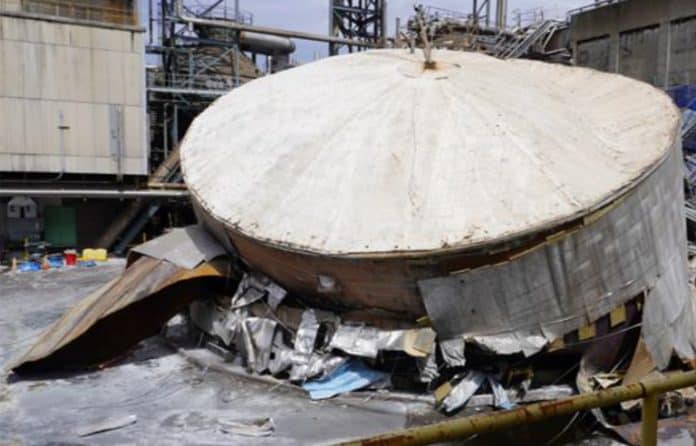
The US Chemical Safety Board took the picture above as part of the investigation into an accident that killed 11 people. We think the accident resulted from a non-conservative decision.
We’ve written many articles on non-conservative decisions. Here are three examples that may interest you:
- Conservative Decision-Making
- Life-Changing Decisions
- Hearing Warnings: The Need for Senior Executives to Listen and Respond to Signals that Indicate Unacceptable Risk
I don’t know if non-conservative decisions precede all accidents with multiple fatalities. However, I have seen many multi-fatality accidents that were preceded by non-conservative decisions.
Admiral Rickover led the first high-reliability organization, and a key basis for that organization was conservative decision-making (which he called “Facing the Facts”).

Rickover described Facing the Facts as:
“… To resist the human inclination to hope that things will work out,
despite evidence or suspicions to the contrary.“
“If conditions require it, you must face the facts and brutally make
needed changes despite significant costs and schedule delays. …
The person in charge must personally set the example in
this area and require his subordinates to do likewise.“
This LINK provides one design and one production example from the Nuclear Navy that demonstrate conservative decisions and the alternative way Rickover approached them.
Below is an example of how non-conservative decisions can cause multiple fatalities.
Here’s the Story – 11 Killed by Tank Failure
See the tank failure happen in the video below…
The US Chemical Safety Board (CSB) reported that on May 26, 2026, the tank in the video above failed, releasing 900,000 gallons of caustic liquid. The release killed 11 workers and seriously injured three others.
Ten months before the tank failed, ultrasonic thickness testing revealed significant thinning (below the minimum safe thickness) in the tank’s lower regions. The contractor performing the tests recommended an internal tank inspection and repair of the affected areas. The inspection report also stated that the tank was not fit for continued service.
The company decided to continue using the tank but scheduled additional external inspections (seven months before the failure and three months before the failure), which also indicated that large sections of the tank were below the minimum safe thickness. The company did not take the tank out of service or derate the tank for limited use (lower maximum levels).
On the day of the accident, a plant upset filled the tank to 90% capacity, and it failed about 45 minutes later.
To me, the decision to keep the tank in service was a prime example of a non-conservative decision that led to 11 fatalities.
Where Can You Learn More About Making Conservative Decisions?
The 2027 Global TapRooT® Summit is scheduled for April 7-9 at the Margaritaville Resort, Lake Conroe, near Houston, Texas. Before the Summit, six special pre-Summit Courses are scheduled for April 5-6. One of these courses is titled “Stopping Human Error” and includes lessons on recognizing non-conservative decisions and making conservative decisions. Would you like to know more about this course? CLICK HERE.
But There’s More

The 2027 Global TapRooT® Summit also includes information about making your company a high-reliability organization. Six best-practice tracks (shown below) might interest you…
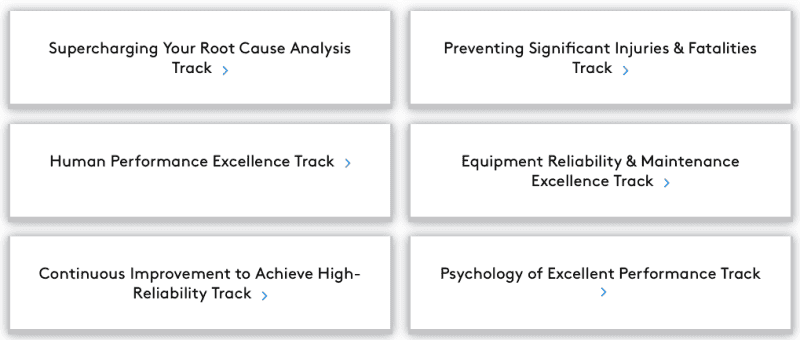
In the Continuous Improvement to Achieve High Reliability Track, there are two best-practice sessions specifically about high-reliability organizations:
- Best Practices from the Nuclear Navy for High Reliability
- Striving for High Reliability in the Private Sector
For the complete Summit schedule, CLICK HERE.
CLICK HERE for complete Summit information, including information about our five excellent Keynote Speakers.

To register for the Stopping Human Error Course and the Summit, CLICK HERE to get a $300 discount off the course fee.